Badgers are protected under The Protection of Badgers Act 1992. This makes it illegal to wilfully kill, injure or take a badger, cruelly ill-treat a badger; or intentionally or recklessly interfere with a badger sett by damaging, destroying, or obstructing a sett or disturbing a badger when it is occupying a sett. The act was introduced because of large public concern for their welfare because of problems with badger digging and baiting. [Read more...]
A certain type of roofing can be bad for bats
The drive for better building performance and, in particular, greater energy efficiency has resulted in changes in building practices and materials in recent years. Where modern houses have become more air-tight, leading to the condensation of water droplets in the moist air within the loft space of the building, breathable roofing membranes have become an increasingly popular choice when building or re-roofing properties. [Read more...]
The procedure for carrying out a bat survey
Carrying out a bat survey is a multi-stage process and the amount of assessment needed depends on the initial evidence and the size and complexity of the structures involved.
Risk Assessment
The initial stage is a risk assessment survey where structure exteriors are visually assessed for potential access points and evidence of bat activity. Features such as small gaps in barge/soffit/fascia boards, raised or missing ridge tiles and gaps at gable ends, which have potential as access points are sought. Evidence that potential access points are actively used by bats includes staining within gaps and bat droppings or urine staining under gaps. Indicators that potential access points are likely to be inactive include the presence of cobwebs and general detritus within the access. [Read more...]
Newt translocations
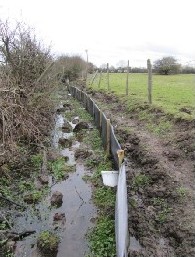 If GCN are to be removed from the site in preparation for a development, the site is usually surrounded by a drift fence to ensure no migration occurs into the site from the surrounding habitats. To do this, a suitably experienced ecologist must first check the site boundary where the fence will be located to ensure that there are no newts present. Erection of the fence may then commence under supervision of an ecologist. [Read more...]